
Economy
Build and Conquer economy guide: money making buildings, population growth, happiness, worker supply and how to fund both city upgrades and a standing army.
Introduction
A strong economy wins wars in Build and Conquer long before the first missile launches. Money flows from commercial buildings — supermarkets early, malls at the top end — taxed from a population that must also be housed, watered and kept happy. That treasury pays for city upgrades, research, construction and the standing upkeep of every soldier, tank and interceptor you field. The central tension is allocation: gold spent on premature military drains the growth curve, while gold hoarded without defense gets deleted by the first competent attacker. This page breaks down the income structure, the population-as-tax-base logic, happiness management, worker supply and the war-budget discipline that separates nations which reach level 5 from nations that stall at level 2 with an empty account.
Economy Levers Ranked by Impact
| Lever | What It Does | Early Priority |
|---|---|---|
| Malls | Highest commercial income per staffed slot | Mid-game target |
| Supermarkets | Reliable income from first commerce onward | Immediate |
| Population | Tax base and workforce for every building | Immediate |
| Happiness | Keeps citizens productive instead of disruptive | Early–mid |
| War Budget | Caps military upkeep so growth never starves | From level 2 |
Economy Systems Explained
Income Buildings
Supermarkets, malls and farms
Population as Tax Base
Every citizen is revenue
Happiness Management
Productive citizens vs. unrest
Worker Supply
Staffing the machine
War Budget Discipline
Upkeep vs. growth
Core Mechanics
The Build and Conquer economy runs on three stacked layers. Revenue: commercial buildings — supermarkets, malls, farms — convert staffed labor into treasury income, with malls at the top of the per-slot hierarchy. Base: population provides both the workers that staff revenue buildings and the tax base itself, so apartment density multiplies economic capacity non-linearly. Cost: buildings consume power and maintenance, units consume upkeep, and city upgrades demand lump-sum gold plus population thresholds. Happiness modulates the whole stack — neglected citizens underperform, raided districts crater mood. The equilibrium to seek is income growth slightly ahead of cost growth: enough surplus to absorb one war wave or one patch shock without halting the progression train. Nations that treat population, staffing and income as one connected system compound; nations that optimize any single layer in isolation discover the bottleneck three steps later.
Advantages
Economic strength is Build and Conquer’s only truly renewable advantage. Territorial gains can be contested and units destroyed, but a mall-and-apartment engine refills the treasury every tick, funding replacements faster than opponents can attrite them. Strong economies also unlock optionality: afford interceptors without starving upgrades, absorb patch-induced rebalancing, and outlast opponents in drawn-out server conflicts. The population flywheel — apartments feeding workers feeding commerce feeding taxes feeding more apartments — is the highest-leverage loop in the game, and it is available from the first minute. Players who master war-budget discipline find that the military almost funds itself from the surplus the economy throws off.
Challenges
The economy’s strength is also its fragility. Income concentrates in a few high-value buildings, making commercial districts prime missile targets — one successful strike on an undefended mall column can erase weeks of compounding. Upkeep creates death spirals: lose income buildings, watch units drain the remaining treasury, and watch construction freeze. Population systems fail silently — water gaps and power deficits freeze growth without alerts, so the tax base can flatline while the UI looks fine. Beta volatility compounds all of this: resource acquisition patches shift production costs, and any income building could be rebalanced. Finally, greedy pure-boom builds die to early aggression; the economy needs a minimum defense skin (sirens, bunkers, a basic interceptor layer) that itself costs treasury to maintain.
Frequently Asked Questions
What is the best early income building?+
How do I recover from bankruptcy?+
How much military can my economy afford?+
Does happiness actually matter for money?+
Quick Tips
Build housing before commerce, always. Every supermarket and mall needs staffed workers; every worker needs an apartment with water and power. The apartment-first order makes the population flywheel fund commerce instead of commerce sitting empty waiting for citizens. When you plan a new district, lay apartments and utility coverage first, then attach the commercial strip that will serve them.
Keep military upkeep permanently below commercial income. Wave-based funding — build, recover, build again — beats continuous production every time. An empty treasury from standing upkeep is the most common self-inflicted collapse in the beta. Check your income-to-upkeep ratio after every unit batch; the moment upkeep creeps near income, stop producing and let the malls catch up.
Wrap your commercial core in air defense the day malls unlock. Income buildings are the highest-value targets on the map; the interceptor layer that protects them pays for itself with a single prevented strike. Greed economies without defense are donation boxes — every gold you save skipping interceptors is gold an enemy missile will happily spend for you.
Featured
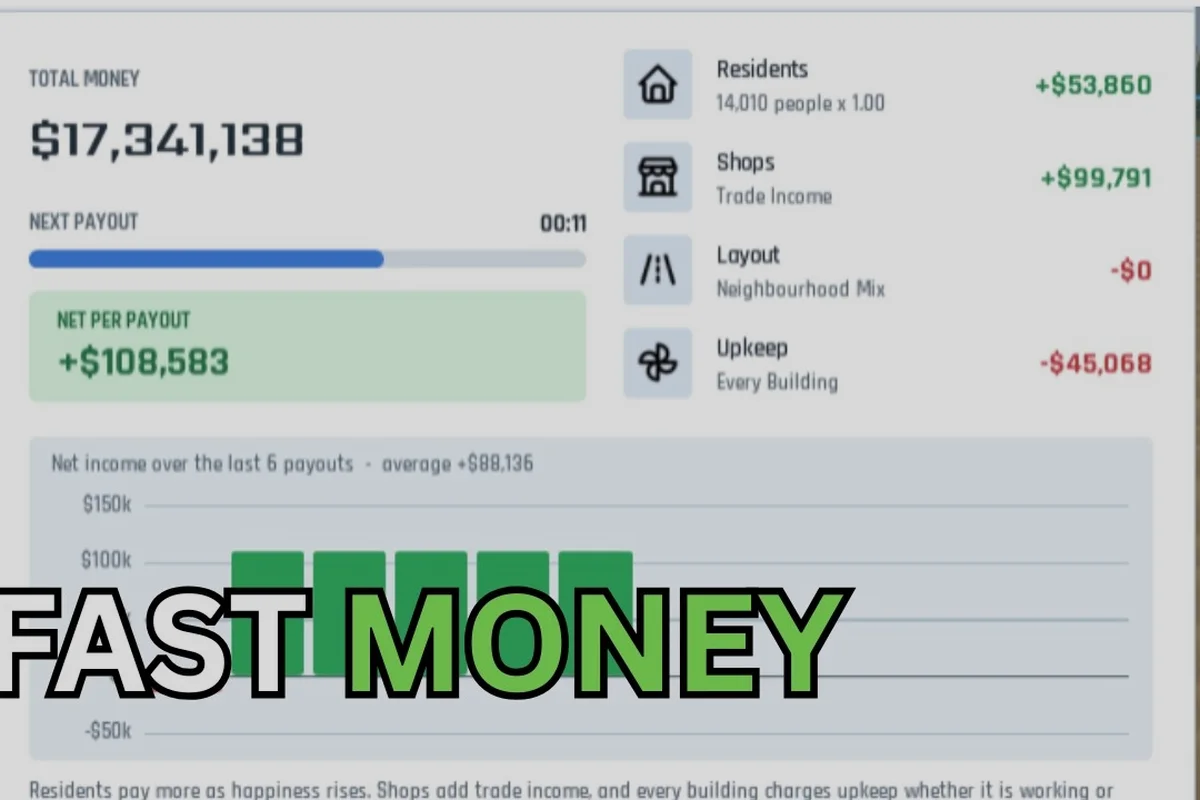
Build and Conquer Fastest Money Method: Trade & Treasury Tips
Discover the Build and Conquer fastest money method using trade routes, treasury management, and income builds strong enough to afford a full military in V0.1 beta.
Build and Conquer Economy Guide: Income, Taxes & War Budget
Master the Build and Conquer economy by balancing apartment-driven population growth, tax income, and a war budget that keeps your military funded in the V0.1 beta.
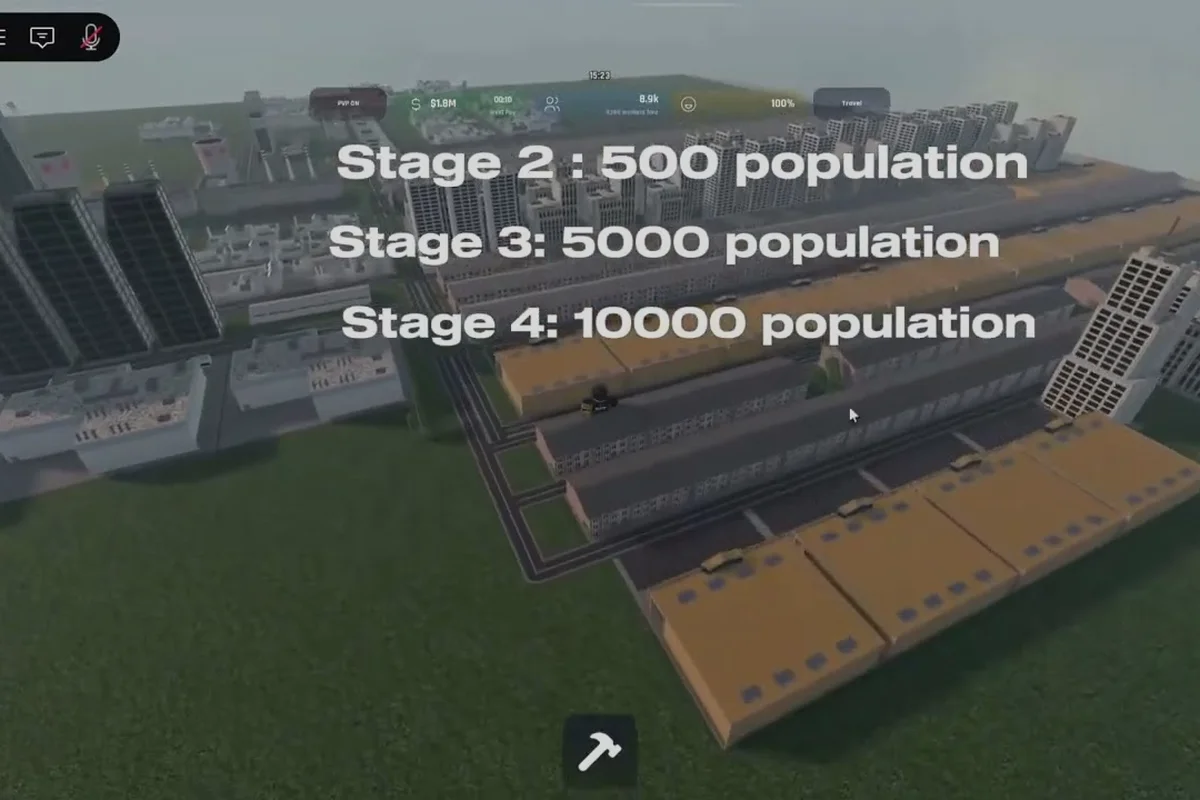
Build and Conquer Profit Margins: Dense City Commerce & Balance
Compare Build and Conquer profit margins across dense city layouts, balance income against spending, and find the best money farming spots in the V0.1 beta.
All Articles
Build and Conquer How to Get More Workers: Wage Budget
Learn how to get more workers in Build and Conquer with the right wage setup, smart spending priorities, and city growth transitions that fuel the V0.1 beta economy.
Build and Conquer Population Growth Guide for New Cities
Follow this Build and Conquer population growth guide to expand housing, raise happiness, and push past key milestones in the V0.1 beta economy.
Build and Conquer How to Get Money: Fast Income Tips
Learn how to get money fast in Build and Conquer by stacking supermarkets and malls, keeping citizens happy, and unlocking passive income routes in the V0.1 beta.
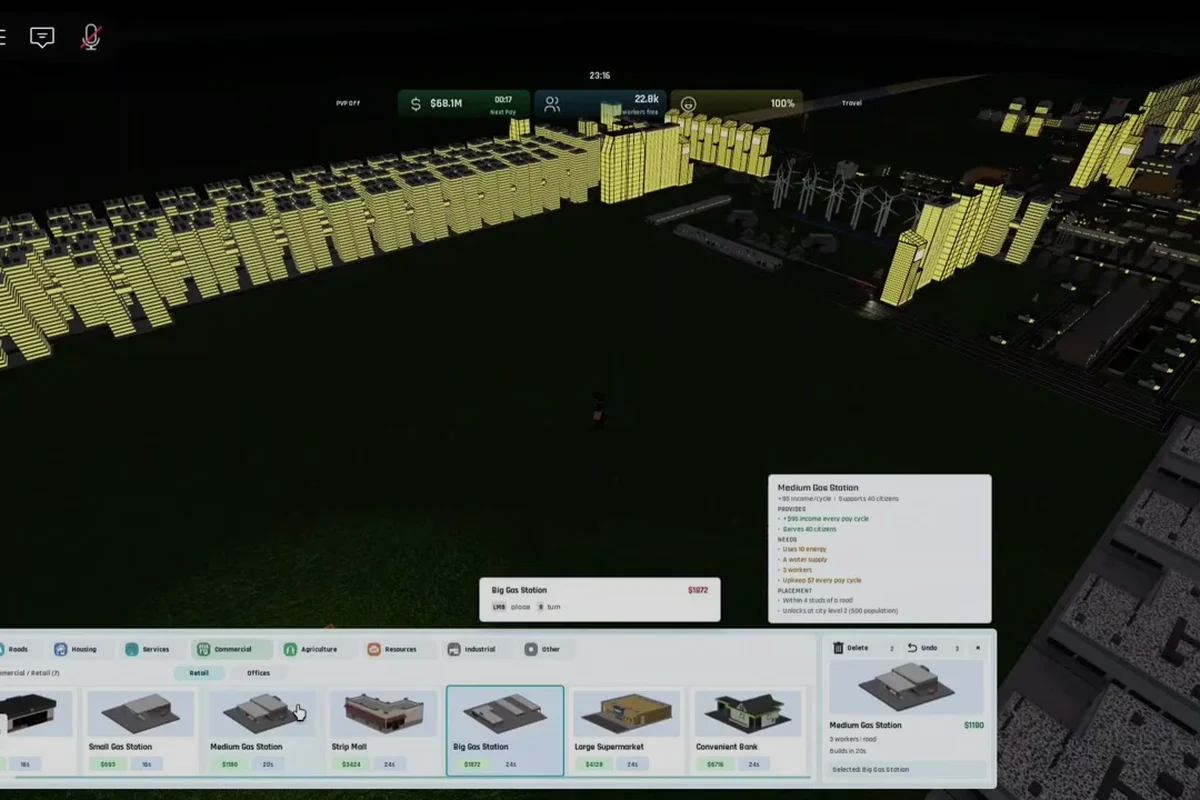
Build and Conquer Mall Income: Shops, Workers & Pop Cap Tips
Boost Build and Conquer mall income by fixing unemployment, maximizing worker productivity, and stacking shops to push past the population cap in the V0.1 beta.